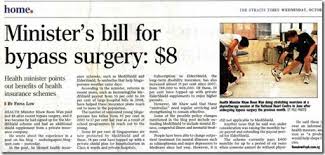
The important lesson of the $8 hospital bypass bill of Khaw Boon Wan in 2011 is to buy additional medical insurance coverage like, free riders. However, free riders are not free, you need to use medisave or cash to buy it. And, in many ways, the ability to use extra money to purchase free riders also reflects your socioeconomic class.
Our Medishield Life is mainly for Class C/B2 wards in the public hospitals:
MediShield Life is sized for subsidised treatment in public hospitals. Those who choose to stay in a Class A/B1 wards or in a private hospital are also covered by MediShield Life. However, as MediShield Life payouts are pegged at Class B2/C wards, the MediShield Life payout will make up a small proportion of the bill only. The patient may therefore need to pay more of their bill from Medisave and/or cash.
If you plan to use Class A/B1 wards in the public hospital or go to a private hospital for your future hospitalisations, you may also wish to consider purchasing Medisave-approved private Integrated Shield Plans (IPs).
IPs are made up of two components – MediShield Life and additional private insurance coverage providing additional benefits and coverage (e.g. to cover the costs of private hospitals or Class A/B1 wards in the public hospitals).
https://www.moh.gov.sg/content/moh_web/home/costs_and_financing/schemes_subsidies/Medishield.html
|
MediShield Life is a co-payment system even with government subsidies. The only way to avoid co-payment and enjoy $0 hospital bill is to purchase IPs with free riders. It means you have to pay extra either using medisave or cash as there is a cap on medisave usessage.
This is in fact a financial risk management.
Upgrading using medisave or cash
What risk? Sick and illness are unpredictable, for example, there is a need to upgrade to Class B1/A wards because of the long wait at the emergency department or there is a need to choose a specialist to do the operation. Or, people just want go to private hospitals for better and faster treatment.
There is a big difference in financial commitment with or without free riders/IPs in the case of the upgrading of wards.
Medishield Life is a basic medical insurance for lower and middle socioeconomic class. With lower medisave contribution and lower cash position, it means a lower financial mean to purchase free riders. However, if one is forced to upgrade for whatever reason, he or she will be in a losing position as compared to someone who has purchased free riders or IPs.
The premium for free riders or IPs will protect the buyers for higher hospital bills and co-payment. Lower socioeconomic class people will suffer a lot by just doing an upgrade. A situation similar to “rich getting richer, poor getting poorer”.
Free rider is not free but protect big bill
Free rider is not free even medisave is used. Medisave is your contribution, your money at CPF Board. For high socioeconomic class people, they make more contribution and so they are likely to purchase free riders and IPs (upgrade to even private hospitals). They can also afford to pay cash for free raider premium.
Free riders can help them to pay for big hospital bill, like the case of $8 heart bypass operation. Khaw and other ministers are high income earners and they also know the financial risk if they are hospitalised. They can even buy free riders for their children and loved ones.
Not all CPF members buy free riders or IPs. For those who do not buy these additional insurance, they will have to face the financial risk of having to pay more if they decide to upgrade to higher class wards.
A medical model based on free riders
However, for medical industry, the practice is to go for market rate whether patients buy free riders or IPs or not. For those people who have no IPs or free riders, for financial risk consideration, staying at Class C/B2 wards is the best option. Even after government subsidy, they still need to pay the co-payment.
Not only medical professionals have this “free riders” mindset, patients who buy free riders insurance also want to make use of this advantage of zero copayment insurance.
This creates a biased situation that those cannot afford and unwilling to buy free riders end up losing out. These group of people, most likely lower socioeconomic class, in fact, are helping to keep the medical cost down but may end up paying the most, even with subsidy, especially in the case that they need to upgrade to higher class.
There is no surprise the Singapore Medical Council has to issue a reminder to keep costs down.
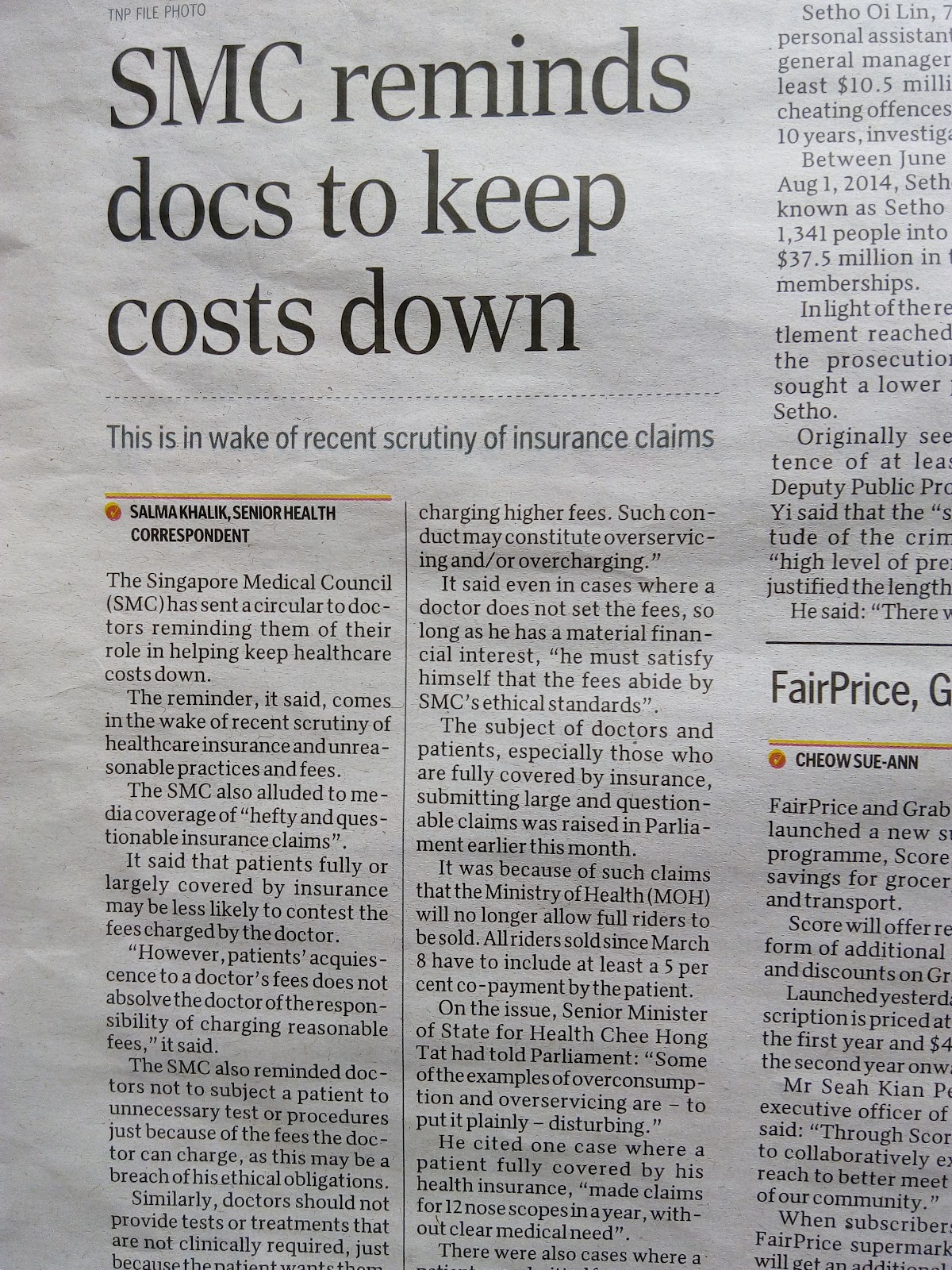
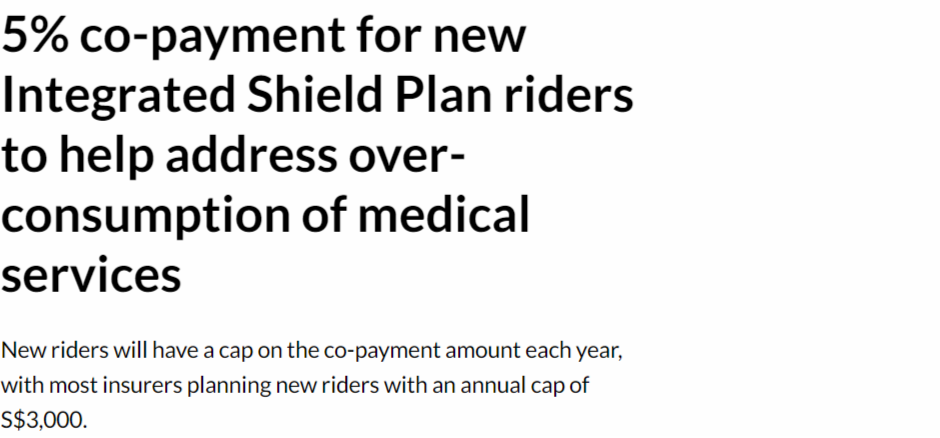
Do you think the 5% co-payment for new IPs will work?
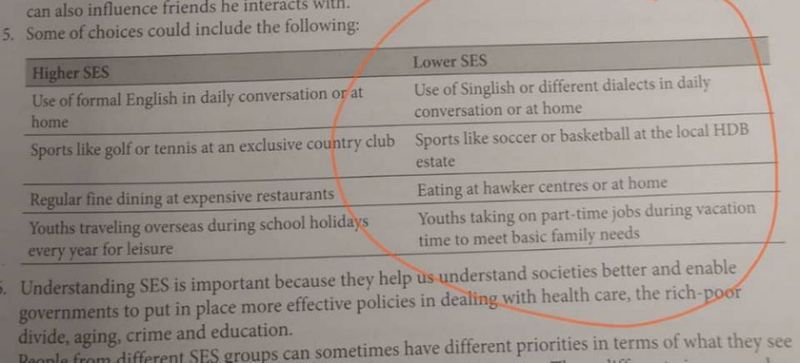
In fact, medical insurance and free riders can also be an indicator for socioeconomic class - whether you can afford to purchase free riders and IPs or not.
Lower socioeconomic class is NOT LOW CLASS
Lower socioeconomic class seems to indicate low class people as shown in the debate of the controversy secondary school guide book.
In ancient China, there are two famous philosophers, Mozi and Zhuangzi, who are well known for their lower socioeconomic class. They dress poorly and have no money.
When Zhuangzi went to meet King LiangHui. The King commented on Zhuangzi’s poor. However, Zhuangzi replied he was materials and assets poor but spirit high.
Medical Insurance Singapore
ReplyDeleteWelcome to FPL-Online Insurance Company in Singapore, We are best insurance agent/brokers in Singapore that offer the best Medical, Home, General, Motor, Travel insurance services in Singapore. Contact us – 65 96 756 403
https://www.fpl-online.com/
It is an excellent blog, I have ever seen. I found all the material on this blog utmost unique and well written. And, I have decided to visit it again and again. ryder cup 2020 live stream
ReplyDeleteAdmiring the time and effort you put into your blog and detailed information you offer!.. oet online coaching
ReplyDelete