Do Singaporeans have crisis mentality? In the video below, a young lady from China seems to suggest Singaporeans do not have crisis mentality.
What is crisis mentality? A Google search gives the following meanings:
#They often cost large amounts of time, money, emotional distress, and even relationships! Soon a lifestyle is created, and your way of thinking turns into what psychologists call a “crisis mentality,” meaning that you can only function from one crisis to another.
#“state of continuous panic when challenged.”
#"crisis mentality" quite means "someone who is always thinking the worst will happen"
#A combination of danger and opportunity
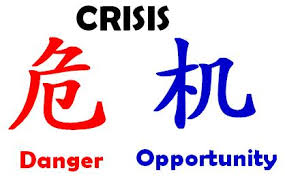
In a unique Singapore education, crisis mentality can also mean fear, ‘kiasu’, ‘kiasi’ as explained below:
[SINGAPORE: Nominated Member of Parliament (NMP) Kuik Shiao-Yin on Tuesday (Apr 5) called for the eradication of Singapore’s “kiasu” (Singlish for being afraid to lose) culture, describing it as a national habit of fear that poses a cultural roadblock to transformation and at great cost to the economy.
“Fear has been a favourite motivational tool of many of our parents, teachers, bosses and even politicians,” Ms Kuik told Parliament on the second day of Budget debates. “Managed well, fear is a perfectly healthy kick in the pants to force us out of complacency and into action. Fear compels us to man up, save more, study hard, work long. Fear in that sense is an emotion that does help us take care of our future.”
“But it loses these powerful positive effects when it goes beyond a temporary emotion we feel, to a permanent disposition we live in. When fear becomes part of our emotional and cultural DNA, we lock ourselves into a habit of self-limiting behaviours.”
(http://www.channelnewsasia.com/news/singapore/singapore-should-kill/2667816.html)
In over 50 years, our education system has consistently produced ‘fear’ and ‘kiasu’ mentality to Singaporeans. We are not lacking in crisis mentality. We are having the wrong education of crisis mentality. We have been educated by the People’s Action Party to have pessimistic crisis mentality - fear, kiasu, kiasi, seeing danger not opportunity.
We fail to see the opportunity, the alternative and the change. This perhaps is what the Chinese lady’s view of Singaporeans. There is no crisis mentality here.
In actual fact, Singapore is having a wrong kind (pessimistic) of crisis mentality:
#We only know one political party that can govern Singapore. There is no alternative.
#We are so afraid of losing this party.
#We look only at the danger of losing this party and fail to see the opportunity of it.
#Anything or anybody goes against this party is bad or even anti-Singapore.
The PAP government, through social engineering, media, education, culture …, has successfully planted the pessimistic crisis mentality into the minds of Singaporeans.
What is the ultimate end of this negative crisis mentality education?
Succession plan and the continued one-party state.
When moving the constitutional amendments of the Elected Presidency, PM Lee explains:
"Since the elected presidency began, I have been operating the mechanism that we designed, and discovering its glitches.
"I helped to refine and amend the scheme as we went along," he said during the debate on the proposed changes to the elected presidency under the Constitution of the Republic of Singapore (Amendment) Bill.
While the institution has been functioning well, he added, the changes made now are in the long-term interests of Singapore and will strengthen the elected presidency, which is an important stabiliser in the political system.
But further changes will still be needed in the future as the system has to be continually refined, he said. (reach.gov.sg)
The explanation on the refinements and changes to EP is a pessimistic crisis mentality. It looks at the negative side (fear, kiasu, kiasi) and warns Singaporeans the danger ahead. Has PM Lee mentioned about the opportunity, the positive of the old system?
Throughout the Chinese history (perhaps also for other civilisations), as explained in my previous post, all capable Chinese emperors had put crisis mentality and succession plan as their top priority. They were afraid the dynasty they built would disappear after their deaths. However, none of them had succeeded in doing so.
Fear, kiasu, kiasi, and prevention succession plan can not sustain a long-live dynasty. Can the PAP be the odd? And make a difference.
It is time we educate ourselves with the right and positive crisis mentality as there is no such thing called long-live PAP.
Comments
Post a Comment