Low press freedom, high inequality, and now questionable fiscal responsibility and checks and balances in public financial management.
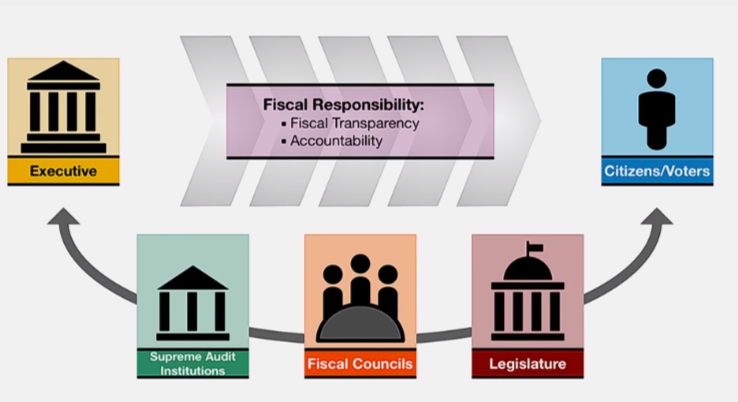
In Module 11: Institutional Oversight of the Budget and PFM of Public Financial Management course by edX@IMF, it is stated that:
The government is in charge of preparing and implementing the budget, but it needs to be accountable to independent institutions. Which institutions are involved in oversight, and support fiscal responsibility? We discuss the roles of Supreme Audit Institutions, Fiscal Councils, and the Legislature (parliaments). You will also learn how oversight models vary around the world, and what is required to ensure that these institutions carry out their functions. Most notable are the requirement for independence of these institutions, timeliness of reporting, and the ability to interact with civil society.
Although Singapore is a financial centre and a good partner of International Monetary Fund, we score poorly in Supreme Audit Institutions, Fiscal Councils, and the Legislature
(parliaments). Our Auditor-General is not independent. We do not have Fiscal Council. While our parliament is almost a one-party rule.
Even though in paper, Singapore under PAP government performs well in budgeting and auditing?, if we consider the Institutional Oversight of the Budget and PFM, the roles of Supreme Audit Institutions, Fiscal Councils, and the Legislature (parliaments), in the longer term, we will face sustainability problems. There is certainly a lack of independent bodies and citizens engagement in checking the fiscal responsibility.
Let explain Supreme Audit Institutions, Fiscal Councils, and the Legislature (parliaments) using IMF language:
Supreme Audit Institutions (SAI) are independent agencies responsible for auditing government revenue and expenditure. There are several models of external audit: the two main types are the judicial model and the parliamentary model, and there are other variations.
The effectiveness of SAIs relies on several criteria: scope and type of external audit; characteristics of the institution; publication, timeliness, quality and follow-up on SAIs' reports
Fiscal Councils are independent, non-partisan bodies that assess government's fiscal policies, plans, rules and performance against macroeconomic objectives. Most fiscal councils today are in advanced economies, and there is growing interest in emerging markets and developing economies.
The legislature reviews and approves the budget, reviews its execution and at year-end, holds the executive accountable. The capacity of the legislature to play a role at each stage of the budget process is influenced by political, organizational, and institutional factors.
Legislature’s power to amend the budget is crucial. It is linked with the quantity and the quality of information the legislature receives and sufficient time to review the draft budget is necessary for an effective review of the draft budget. At year-end, the Legislature reviews the budget implementation, to assess the compliance of the budget execution with the original approved budget law.
IMF also stresses the importance of Legitimacy of Public Participation in Public Financial Management:
Civil society and citizens interact directly with public authorities to design, implement and review budget and fiscal policies and there is a growing international consensus on the involvement of citizens in Public Financial Management.
Public participation in the budget process relies on several channels and tools, that are complementary and should be combined.
Public participation in PFM still needs to be improved. Madagascar Citizens Budget or Social Audits in India are experiences introduced by these countries to enhance public participation.
Several criteria should be met to ensure public participation effectiveness: an inclusive and transparent process, sufficient time allowed in the budget cycle, informed citizens and incorporation of public inputs in the budget process.
Do you think the PAP government will agree with Citizens Budget and Social Audit?
[Fiscal transparency]
Fiscal transparency, or in other words, openness about public finances, has gained prominence over the past two decades. In this module, we discuss fiscal transparency in detail: its main elements, its benefits, and the challenges it raises. We also offer a tour of the latest initiatives towards increased transparency, including the revised IMF Fiscal Transparency Code, the OECD’s Principles of Budgetary Governance, the Public Expenditure and Financial Accountability Framework (PEFA), the Extractive Industries Transparency Initiative Standard (EITI), the Open Budget Survey, and the Global Initiative for Fiscal Transparency (GIFT). We will analyze how different actors — the government, citizens, international organizations and financial markets — contribute to fiscal transparency, and hear the views of various stakeholders in the fiscal transparency area.
[Difference between fiscal transparency and budget transparency]
This video presents a general definition and distinguishes between fiscal transparency and budget transparency. Fiscal transparency has a wider definition which includes all public assets, liabilities, risk and contingencies.
Clearly, this means Singapore’s fiscal transparency should include Temasek, GIC, and all state-owned enterprises.
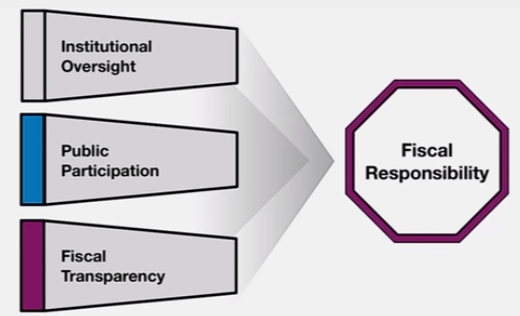
And most importantly, fiscal responsibility means institutional oversight, public participation and fiscal transparency.
[Lack of transparency]
This section concludes with a look at three examples of lack of non-transparency together with an explanation on how a lack of transparency may affect important fiscal indicators.
Najib as a reminder
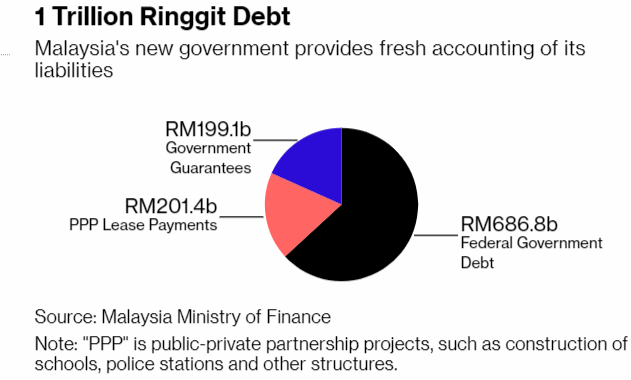
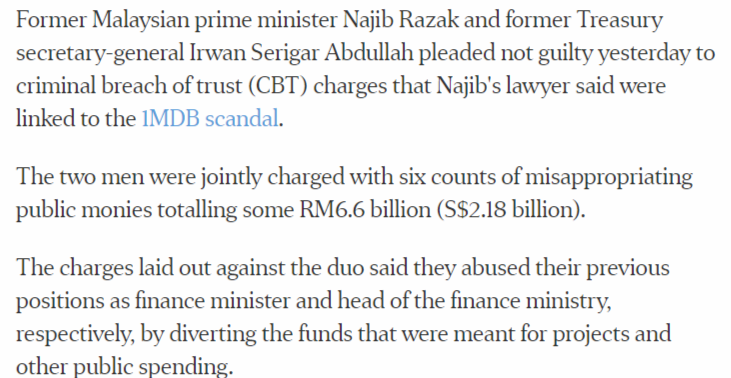
In summary, Najib government is a good example of the many problems mentioned in the above videos. We cannot only look at the budget alone. We must consider fiscal transparency. Malaysia during Najib Adminstration already had a strong opposition, having more popular votes, however, Najib could still control and manipulate the fiscal accounts.
Just imagine how serious it can be for Singapore.
The lack of fiscal transparency, lack of public participation and lack of a strong opposition will cause long-term sustainability problems for Singapore.
It looks OK now but how about our children and future generations.
Comments
Post a Comment