
Beyond Oxley Road, the moral of the story is FEAR, and perhaps Enlightenment to learn another route.


The Oxley Road House saga is not a simple family affair.  It touches on the future of Singapore beyond the Lee Kuan Yew’s legacy - our future direction, with or without fear as a mean of administration. It is time we learn and enlighten ourselves from this unfortunate development.    

What has happened to Lee Kuan Yew’s values?# A joint statement issued by Dr Lee Wei Ling and Lee Hsien Yang reminds us to think over and again how we progress in the past 50/60 years as well as the mistakes we made at the same time.


For ordinary citizens, especially, critics and opposition members, fear is a common challenge in the past and in the present. We need to revalue LKY’s legacy to see how to remove the fear factor, with or without Lee Hsien Loong in the future.

PM Lee Hsien Loong claims the statement contains untrue allegations. However, in some countries, these allegations will lead to Parliament investigations or Congressional enquiry. Here are some examples:
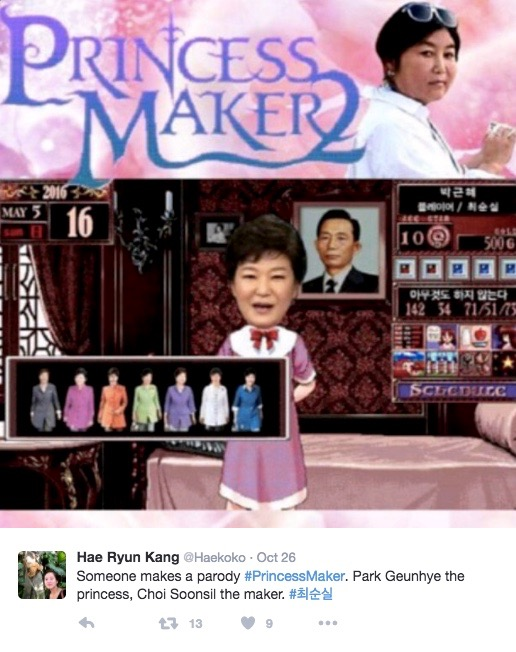
Source: internet     


Some of the allegations in the statement:

  • We were shocked to see that Hsien Loong had used his position as Prime Minister to obtain a copy of the Deed of Gift from Minister Lawrence Wong

  • Hsien Loong’s then personal lawyer, Lucien Wong. Lucien Wong was made Singapore’s Attorney-General in January 2017.

  • Hsien Loong, despite his undertakings to recuse himself, proceeded to make extensive representations to the Committee.

  • the role of his wife, Ho Ching. Ho Ching holds no elected or official position in government, her influence is pervasive, and extends well beyond her job purview.

  • He (LHL) wanted to assert in Parliament that Lee Kuan Yew had changed his mind, hoping to inherit the faith Singaporeans had in Lee Kuan Yew through the visible symbol of the house.

Do we want to continue living the same way without changes? Shall we enlighten ourselves from the Lee Kuan Yew’s legacy?  After so many rounds of general elections, the parliament still cannot help Singaporeans to remove their fear. Is this a legacy we want to keep?


FEAR#1    The Future of Singapore
In the statement, Wei Ling and Hsien Yang are worrying about Singapore.
Without Lee Kuan Yew, especially his values, what is our future? Our direction and principles?

FEAR#2    Loss of Lee Kuan Yew’s Spirit and Value
The statement seems to suggest PM Lee Hsien Loong cannot be trusted to carry on LKY’s values.
We have to re-visit LKY’s values and make improvements.  If we are satisfied with his values, the fear factors will not go away.  Singaporeans, therefore, need enlightenment from Lee Kuan Yew’ s legacy.

FEAR#3    Lack of Checks and Balances
The statement also mentions about “We are concerned that the system has few checks and balances to prevent the abuse of government.”  For too long, Singapore’s one-party rule has contributed to the lack of checks and balances. If we have no confidence on PM Lee Hsien Loong, we need to find a solution or an alternative.  

FEAR#4    Interventions
Without checks and balances, interventions of government affairs or appointments can be expected. The statement gives some examples. (see above allegations)  

FEAR#5    Personal Safety
It is clear that ‘Hsien Yang feels compelled to leave Singapore’. It can be due to personal safety or unhappy living here under a ‘big brother omnipresent’.
The statement says “We feel hugely uncomfortable and closely monitored in our own country.”
People within the establishment are under ‘closely monitored’, what about ordinary people?

FEAR#6    4th Generation Leadership
The statement implies that the so-called succession plan of fourth generation leadership of Singapore is a flaw - “We also believe, based on our interactions, that they harbour political ambitions for their son, Li Hongyi.”
The succession plan maybe just a ‘wayang’ - a plan to confuse Singaporeans.  
If this is true, voters will need to be enlightened.

FEAR#7    Further control on social media
The statement is using Facebook to reach the public. The mainstream media has no control over the full text but can choose what to publish. Certainly, this is not a fake news.
What will be the next step for PM Lee to contain and control social media?  

This is well beyond the Lee Kuan Yew’s legacy.

Singaporeans have to decide.

# You can read the full statement here
https://drive.google.com/file/d/0ByodqaSLlpPIWHdRdFE2QlZYbzg/view

Comments

Popular posts from this blog

Sub-standard PAP and the Singapore education system

I make a 'policy shift' when I hear the debate of right politics, constructive politics and sub-standard opposition. My original aim is to discuss about “Su Dongbo, Zhang Juzheng and Singapore education system”. The discussion will end with a sub-standard PAP, in particular from the assessment of the quality of PAP potential candidates. Another policy shift is to discuss it like a play, a drama and make it more entertainment rather than a sub-standard political discussion. Act 1 Gangster’s demand Imagine a sense in the Hong Kong's gangster movie (or a godfather movie), the gangsters' master is shouting at his poor opponent and demand him to give a price for his wrong act. The poor guy without any resources can only offer his body or his service to work for the master. Back in his own chamber, the master is still not satisfied and continues to shout 'don't play, play, you think you are hero, you think you are tiger, or superstar or acting ...

Is Prism Project Another Central Planning of the PAP?

There are 3 scenarios under the Prism Project#1 of Institute of Public Policy.  However, it looks more like the central scenario planning of the People’s Action Party. From the instructional menu of Prism Project Primer #2, participants were guided to a situation in 2022 and they have to imagine, within the Primer framework, to come out with 3 possible scenarios in Jun-Aug 2012.  2022. What a coincidence! Not long ago, PM Lee declared that he would like to hold the prime minister post for another 10 years. The other coincidence is the similarity between the 3 scenarios and the candidates of PE2011. How competitive and sustainable are the 3 scenarios to the people of Singapore and to the PAP?   Will the scenarios produce competitive and sustainable Singapore, Singaporeans or the PAP?  Perhaps, as what the Chinese say: planning cannot always catch up with changes.   And planning sometimes turns out the wrong, bad and unexpected results, espec...

对话一定要有共识吗?还是求取多元性来丰富自我?

全国对话喊到现在还一直高喊全国要有共识,尤其是全国对话的结果就是要寻求新加坡人的共识。不然,行动党就会说,我国的政治将会出现分裂,新加坡就变成一个不团结的国家。 全国对话一定要取得共识吗?文明对话的目的难道就是为了取得全国共识吗?如果是共识,那就一定有取舍。是不是说强势的人就领头共识,而落势的就落得一无所有。这不又走回老路,一条行动党独大的旧政治框框吗?看来,行动党对于过去,仍然依依不舍,行动党的共识,就是国家的共识,新加坡人的共识。 对话是要加深双方的了解,尊敬并且互相学习,吸取对方的优点,填补自己的缺点。这就是多元性的好处。然而全国对话的结果,如果只是强求共识,而忽略多元性和不同的意见,甚至否定他人的意见,那么,这个共识,是否具建设性,破坏性,还是分裂性,那就很难说了。 行动党似乎忘记了多元性。文明的对话并不是要把自己的 意见,信仰和理念强加给对方。即使这些意见,信仰和理念都是好的,善的。但是,对方未必会欣赏,未必会接受。因此,对话的结果应该是吸取对方的意见,改进自己的治国方针,然后,交给人民去决定,而这个决定也不过是大多数人的共识,而不可能是全国人民百分百的共识。 (乐观的看,行动党的全国对话,也不过是改进自己的治国方针,通过自己的小圈圈,自我讨论,研究,更新和改良行动党的政治策略,然后,在下一次大选时,拿出来让选民决定。因此,所谓的共识,在全国人民还没有决定前,仍然不是全国大多数人的共识。很可惜,行动党原本应该通过全国对话这个平台,吸收更多对手的意见,不同的观点,将它们纳入自己的政治策略中,然后在大选中让选民选择这个纳入反对意见的新政纲。可惜的是,行动党没有这个雅量,也或许根本看不起反对的意见。因此,它只能企图通过全国对话,硬要说这是全国共识。所以,充其量这只能说是行动党小圈圈的改良版政治策略,绝对不能说是全国共识。) ‘己所不欲,忽施于人’我们不喜欢的,不要强加他人身上。同样的,我们喜欢的,也不可以强加于他人身上。例如,有些人不喜欢吃有些食物,我们却很喜欢吃这类食物,但是,我们要尊重个人的喜好,不要强迫他人接受我们的建议。了解了这点,下一回提供食物时,就会通过多些选择,而不是只提供自己喜欢的食物。这点一般新加坡人都有这个敏感度,我们会了解马来族的要求,尽量避免他们敏感的食物。 为何行动党过去能够了解国人...